When Influence Prescribes: Why Health Advice on Social Media Needs Responsibility
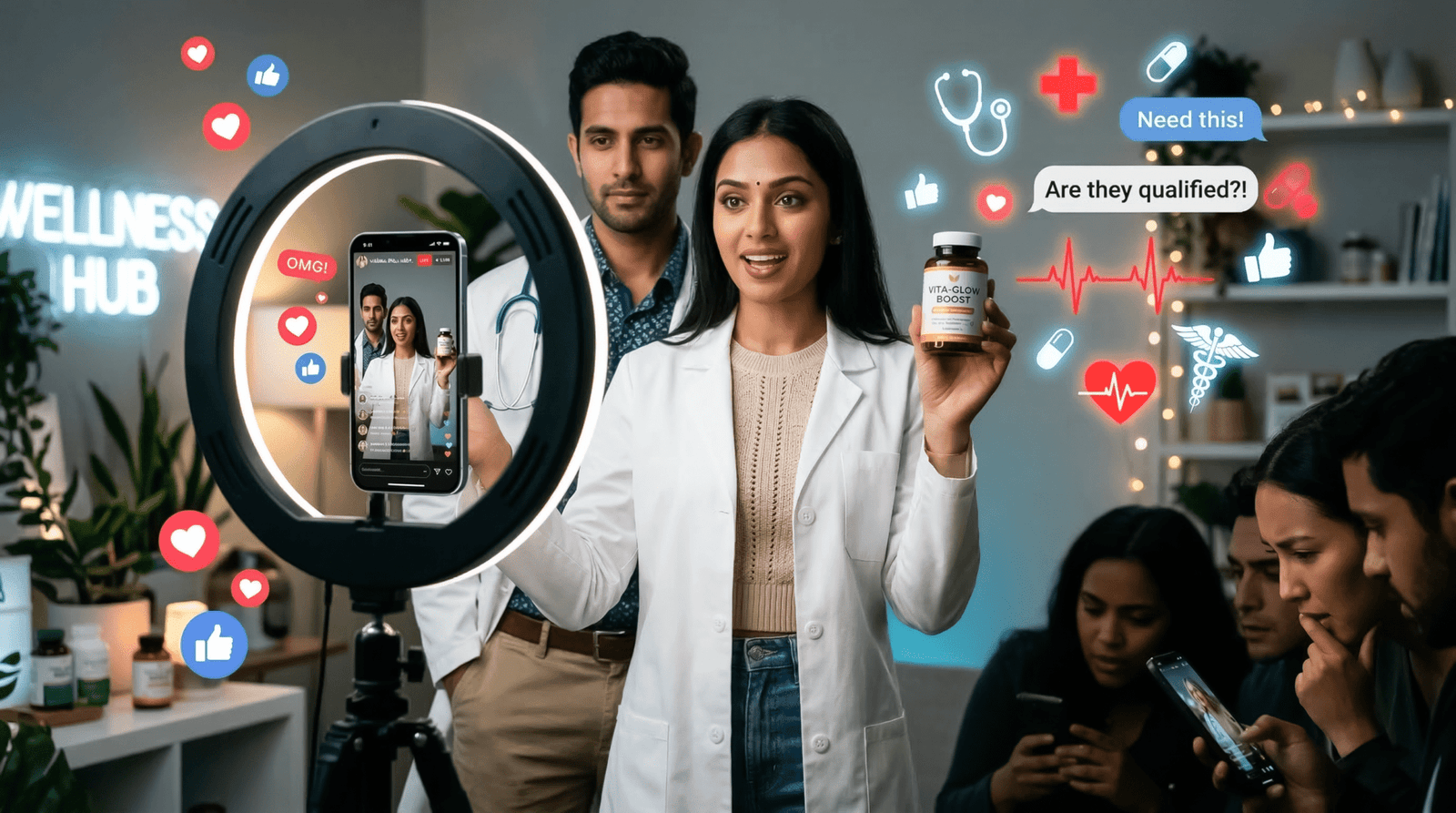
In the age of Instagram reels and YouTube shorts, health advice is no longer confined to clinics, hospitals, or academic journals. Today, millions of people receive daily guidance on diet, supplements, immunity, mental wellbeing, and lifestyle from social media influencers. Some of this content has played a meaningful role in democratizing health awareness. But when influence begins to resemble prescription, the stakes change dramatically.
Health communication is not entertainment alone—it shapes medical decisions, influences behaviour, and sometimes determines life-and-death outcomes. That is why the rise of health influencers presents one of the most complex ethical questions of the digital era.
Influence carries power. In health, it must also carry responsibility.
The Promise and the Problem
There is no doubt that digital creators have expanded the reach of health education. Conversations about mental health, fitness, nutrition, and preventive care have entered everyday discourse in ways that were unimaginable a decade ago. Social media has helped normalize discussions around anxiety, menstrual health, diabetes prevention, and physical fitness—subjects once hidden behind stigma or lack of access.
However, the same platforms have also become fertile ground for misinformation.
The problem arises when popularity substitutes for expertise. An influencer with millions of followers recommending supplements, detox regimens, hormone treatments, or immunity boosters can create a perception of credibility that may not exist. Unlike entertainment or fashion advice, inaccurate health information can have direct consequences for human wellbeing.
When unqualified individuals present personal experiences as universal solutions, audiences may delay professional consultation, abandon prescribed treatment, or experiment with unverified remedies.
This is precisely why regulators across the world are beginning to draw boundaries around health communication on social media.
India Has Already Recognised the Risk
India has taken important regulatory steps in this direction. The Ministry of Consumer Affairs, in collaboration with the Ministry of Health and Family Welfare, the Ministry of AYUSH, the Food Safety and Standards Authority of India, and the Advertising Standards Council of India issued additional guidelines for health and wellness influencers to curb misleading endorsements and unsubstantiated claims.
These guidelines require influencers to clearly disclose when they are promoting health-related products or services. Influencers presenting themselves as health experts must declare their professional qualifications. Content that could be interpreted as medical advice must carry appropriate disclaimers clarifying that it does not replace professional consultation, diagnosis, or treatment.
The guidelines also warn against exaggerated or misleading claims, particularly those suggesting that a product can diagnose, cure, treat, or prevent diseases without credible scientific evidence.
Similarly, the Advertising Standards Council of India has emphasised that influencers giving health advice linked to products should possess relevant professional qualifications such as medical, nutrition, or healthcare credentials depending on the subject matter.
The logic behind these rules is simple: when advice sounds technical, the audience assumes expertise. Without safeguards, the line between storytelling and medical recommendation becomes dangerously blurred.
Global Precedents
India is not alone in recognizing this risk. Around the world, regulators treat health communication as a high-risk category.
In the United States, the Federal Trade Commission requires influencers to disclose paid partnerships and prohibits deceptive or unsupported health claims. Across Europe, strict consumer protection and advertising regulations govern how health and nutrition benefits can be communicated.
The principle is universal: health communication must be truthful, transparent, and supported by evidence. Social media does not change that standard.
The Responsibility of Influencers
Influencers occupy a unique position in modern culture. Their strength lies in relatability and authenticity. But when they step into the territory of health advice, authenticity must be supported by expertise.
Responsible health creators should follow three essential principles.
First, they must stay within their competence. A fitness creator can inspire exercise habits, but diagnosing hormonal disorders or recommending supplements without scientific backing crosses into medical territory.
Second, influencers must disclose expertise and affiliations clearly. If a creator is a qualified doctor, nutritionist, physiotherapist, or psychologist, that should be stated transparently. If they are not, audiences deserve to know that as well.
Third, influencers must distinguish personal experience from professional advice. Sharing one’s personal routine can be useful, but presenting it as a universal prescription is misleading.
The difference between sharing and prescribing must remain clear.
A Call to Marketing Leaders and Brands
The responsibility for ethical health communication does not lie with influencers alone. Brands and marketing planners also shape the ecosystem.
Health and wellness products—from supplements to diagnostics and fitness technologies—are among the fastest growing advertising categories on digital platforms. Influencer partnerships have become a central part of marketing strategies.
But short-term visibility cannot come at the cost of public trust.
Before engaging influencers, campaign planners must ask critical questions. Does the creator have credible expertise related to the product category? Are the health claims scientifically substantiated? Is the partnership transparent about sponsorship and endorsement? Could the messaging be misinterpreted as medical advice?
Advertising has always depended on credibility. A misleading campaign may generate impressions today but erode trust tomorrow.
For an industry that celebrates creativity at global platforms such as Cannes Lions International Festival of Creativity, the next frontier of excellence may lie not only in storytelling but also in ethical responsibility.
Influence in health communication demands higher standards.
The Role of Public Awareness
Audiences must also develop stronger digital literacy around health content.
A simple principle can prevent many mistakes: if the advice could affect your health, verify the expertise of the person giving it.
Viewers should ask basic questions. Is the person medically qualified? Are credible sources cited? Is the recommendation linked to a product being sold? Would the same advice be supported by healthcare professionals?
Social media can be a powerful starting point for awareness. But it should never replace consultation with trained medical professionals.
Influence Must Serve Public Good
The influencer economy is now a multibillion-dollar industry. But influence in the health domain carries a moral dimension that goes beyond marketing metrics.
Health is not a lifestyle trend.
It is a public good.
The most powerful creators of the future will not be those who simply capture attention, but those who build trust, respect science, and place public wellbeing above virality.
In a digital world where everyone can speak, credibility will belong to those who know when not to prescribe.